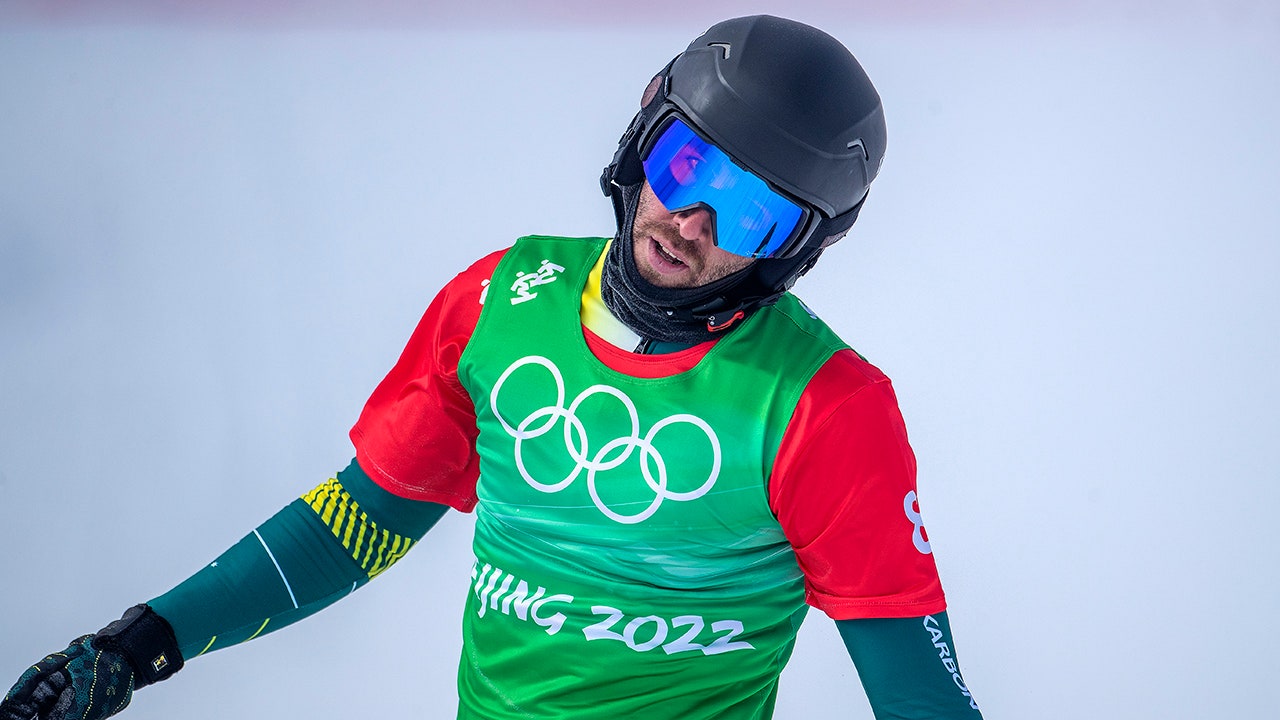
Broken Neck Halts Cam Bolton's Olympic Dream; Replacement Named for Australia
The exhilarating atmosphere of the Winter Olympics in Italy has been clouded by a severe injury, as veteran Australian snowboarder Cameron Bolton's Olympic dream has come to an abrupt and heartbreaking halt. Bolton, a highly regarded snowboard cross specialist, suffered a broken neck during a training mishap, forcing his withdrawal from the much-anticipated Milan Cortina 2026 Games. This incident not only casts a shadow over Australia's medal hopes in the men's snowboard cross but also serves as a stark reminder of the inherent risks faced by elite athletes pushing the boundaries of human performance.
The Australian Olympic Committee (AOC) confirmed the devastating news, detailing the rapid sequence of events that led to Bolton's diagnosis and subsequent withdrawal. His absence is a significant blow to the Australian contingent, which now rallies behind Olympic debutant James Johnstone, named as a late replacement to compete alongside Adam Lambert and Jarryd Hughes.
A Frightening Fall: The Incident and Immediate Aftermath
The incident occurred on Monday, February 11, 2026, during a training session in Italy, just days before Bolton was scheduled to compete in the snowboard cross event. Bolton, 35, took a serious fall, initially appearing to walk away from the crash. However, the true severity of the situation became apparent the following day when he reported worsening neck pain.
Medical staff responded swiftly, and a scan at the Olympic Polyclinic revealed the devastating truth: two stable neck fractures. While "stable" implies the spinal cord was not immediately compromised, it signifies a serious injury requiring immediate and careful management. Bolton was subsequently airlifted to a Milan hospital for further imaging and assessment before being transferred to a nearby hotel for rest and ongoing medical care. The AOC issued a statement confirming, "Cam is in a stable condition and remains in good spirits," emphasizing the coordinated efforts of the Australian Olympic medical team working with local doctors and neuro specialists in Australia to determine the optimal next steps for treatment and recovery.
Bolton's injury is a cruel blow, particularly given his recent successes. He secured a silver medal in the mixed team snowboard cross with Mia Clift at last year's World Championships in Engadin, Switzerland, highlighting his top-tier capabilities and making him a strong contender for an Olympic medal.
The Long Road Ahead: Recovery for an Elite Australian Snowboarder
A broken neck, even stable fractures, presents a significant challenge for any individual, let alone a high-performance athlete whose career depends on peak physical condition. The recovery process for such an injury is typically lengthy and demanding, involving several phases:
- Initial Stabilization: Ensuring the fractures heal correctly, often requiring a neck brace or halo for several weeks or months to immobilize the cervical spine.
- Pain Management: Addressing discomfort and inflammation to allow for early, gentle mobilization.
- Physical Therapy: A rigorous program designed to restore range of motion, strength, and proprioception (the body's awareness in space) to the neck and surrounding muscles. This can be a multi-month, if not multi-year, endeavor.
- Mental Fortitude: Beyond the physical, the psychological impact of a career-threatening injury, especially one sustained at the pinnacle of one's sport, cannot be overstated. Athletes must navigate frustration, fear of re-injury, and the profound disappointment of missing out on a dream. Support systems, including sports psychologists, are crucial during this period.
While the immediate focus is on Bolton's health and successful recovery, the question of his return to elite competition remains open. The resilience of athletes is legendary, but an injury of this magnitude demands patience, dedication, and often, a re-evaluation of future goals. For a deeper dive into the immediate aftermath, you can read more about Australian Snowboarder Cam Bolton Breaks Neck at 2026 Olympics, and details of his initial condition are covered in Frightening Crash: Cam Bolton Stable After Breaking Neck in Olympic Training.
Stepping Up: James Johnstone Joins the Team
In response to Bolton's withdrawal, the Australian Olympic Committee swiftly enacted its "Late Athlete Replacement" option. This crucial contingency plan allows teams to bring in a new athlete under exceptional circumstances. Stepping into Bolton's formidable boots is Olympic debutant James Johnstone, who will now join Adam Lambert and Jarryd Hughes for the men’s snowboard cross qualifying on Thursday. For Johnstone, this is a bittersweet moment – a dream realized under difficult circumstances.
The pressure on a replacement athlete is immense. They must rapidly integrate into team dynamics, adjust to the Olympic environment, and mentally prepare to compete at the highest level with minimal lead-time. Johnstone's performance will be watched closely, not just for his own sake, but as a testament to the depth and resilience of the Australian snowboard program. His ability to perform under such sudden scrutiny will be a significant test of his mettle.
Broader Impact: Misaki Vaughan's Head Injury and Athlete Safety
Bolton's injury was not the only setback for Team Australia during the pre-Games training period. Misaki Vaughan, Australia's entrant in the snowboard halfpipe, was also ruled out of the Olympics after sustaining a head injury during training on Monday and subsequently failing a head impact assessment on Tuesday. Unlike Bolton, no athlete will replace Vaughan, with Amelie Haskell and Emily Arthur representing Australia in the women's halfpipe qualifying.
These two significant injuries within days of competition highlight the brutal reality of elite winter sports. Athletes push their bodies and equipment to the absolute limit, where the margins for error are razor-thin. Snowboard cross, with its multiple riders simultaneously navigating a challenging course of jumps, banks, and rollers, is particularly prone to high-speed collisions and falls. Similarly, halfpipe riders perform gravity-defying aerial maneuvers that carry inherent risks.
The rapid medical response and comprehensive assessment protocols demonstrate the commitment to athlete safety at the Olympic Games. Despite thousands of top-level athletes receiving daily care before and after training, serious injuries remain an unfortunate aspect of these high-octane disciplines. Continual advancements in safety equipment, course design, and medical readiness are paramount to mitigating these risks while allowing athletes to pursue their extraordinary feats.
Conclusion
The withdrawal of Cameron Bolton due to an Australian Snowboarder Broken Neck is a tragic moment for the athlete and the Australian Olympic Team. His Olympic dream, built on years of dedication and sacrifice, has been cruelly cut short just days before he was set to compete on the world stage. Similarly, Misaki Vaughan's head injury underscores the perilous nature of these extreme sports. While these incidents are heartbreaking, they also highlight the incredible resilience of athletes, the dedication of medical teams, and the readiness of replacement athletes like James Johnstone to step up when called upon. As the Milan Cortina 2026 Winter Olympics proceed, the focus will undoubtedly shift to the inspiring performances on the snow, but the spirit of competition will be imbued with a poignant reminder of the sacrifices and risks undertaken by those who dare to dream of Olympic glory. We extend our sincerest well wishes to both Cam Bolton and Misaki Vaughan for a swift and complete recovery.